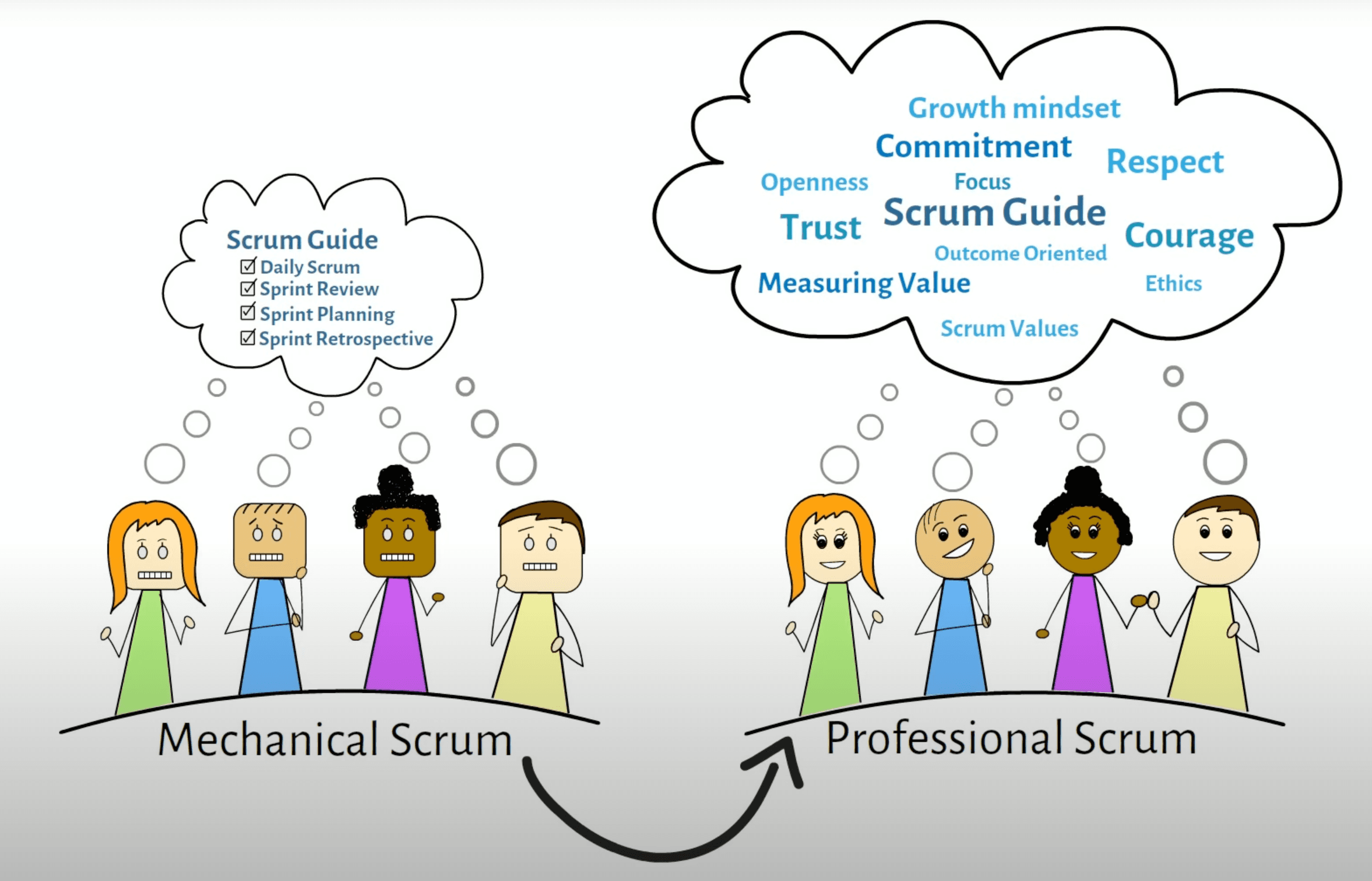
Big common question ???
Have you ever wondered about the difference between Agile and Scrum?
One of the most common misconceptions about Scrum is that it is synonymous with Agile. But it’s not!
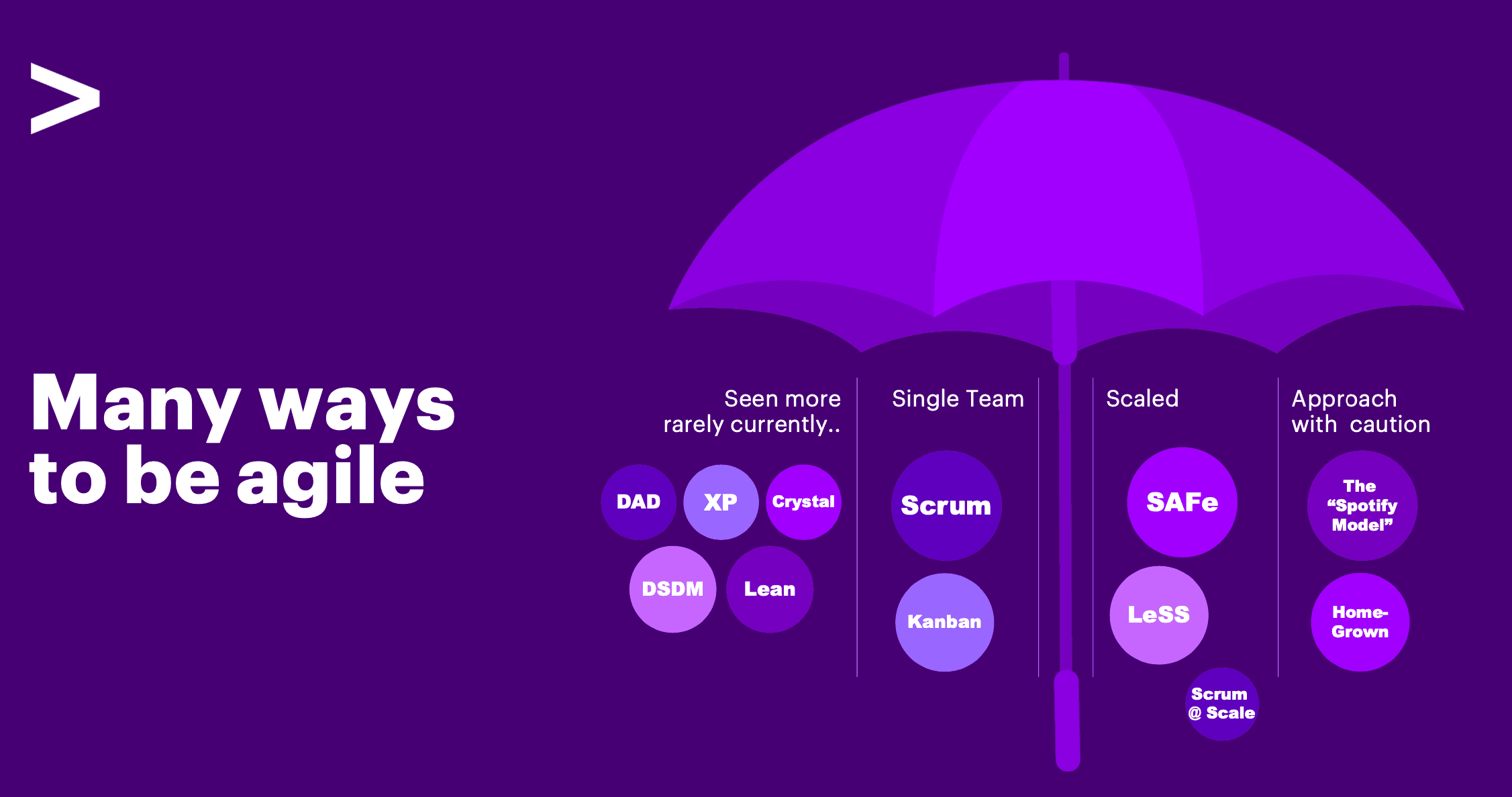
Agile is an umbrella term for a group of approaches that share 04 values and 12 principles to foster an Agile mindset
Scrum is a commonly used Agile method that provides guidance on how to organize work to maximize value for the end user.
While Scrum is implemented at the product development team level, Agile focuses on the entire organization, including leadership and corporate culture.
What is Agile?
Agile is a popular approach to project management that emphasizes iteration and short-term development cycles. Agile prioritizes quick delivery, nimble responsiveness, and collaboration.
Agile Manifesto
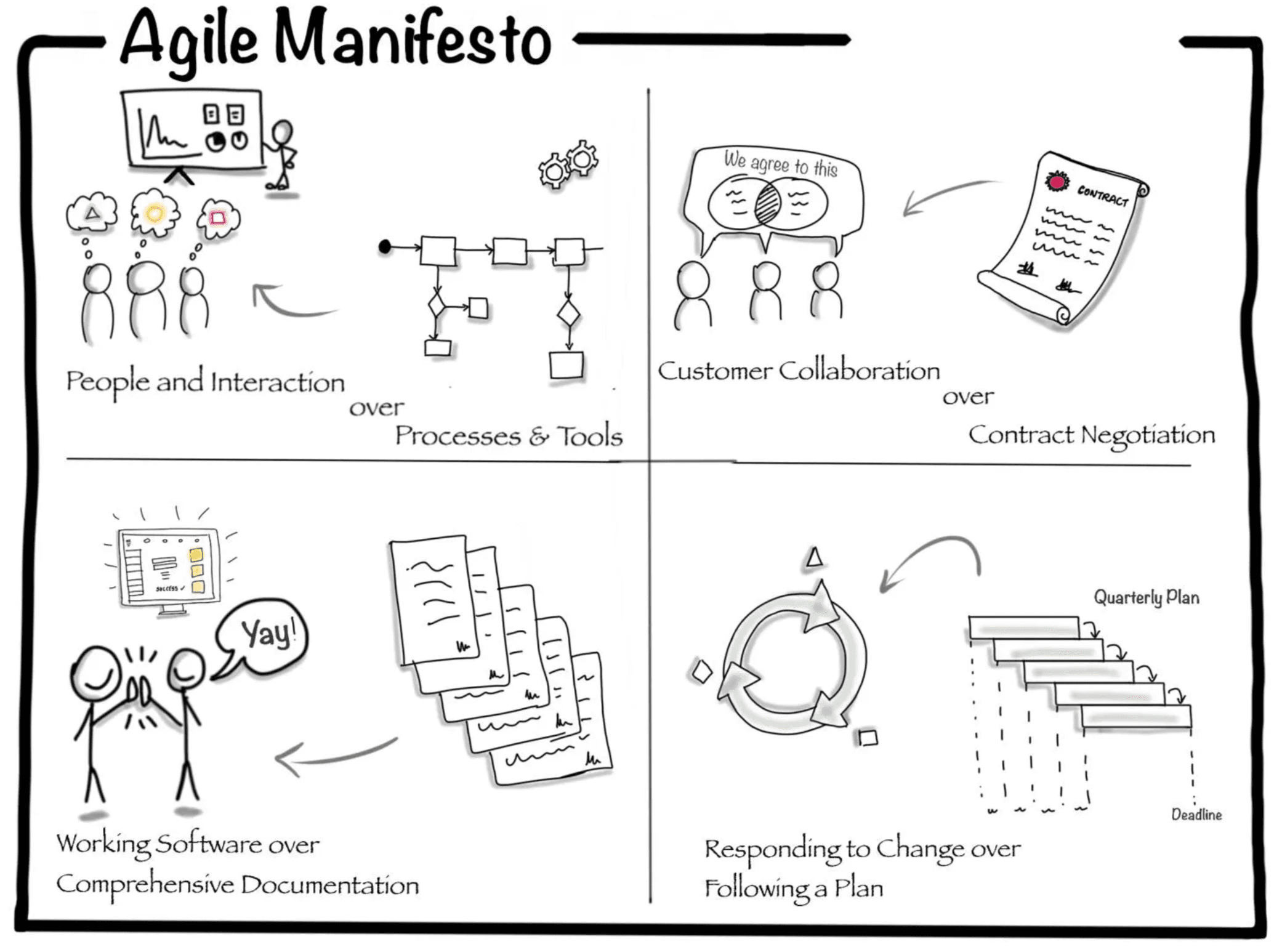
The Agile Manifesto is a document that outlines the central 04 values and 12 principles. It aims to provide an effective model for teams to successfully adopt the philosophy of Agile project management and use it to improve their work process.
04 Agile Values:
To emphasize key priority areas for teams to focus their energies on to enhance agility and responsiveness in the development process
Highlights the focus is on:
-
Team collaboration
-
Customer collaboration
-
Creating a working product that meets customer needs and reacting
-
Adapting quickly with changes
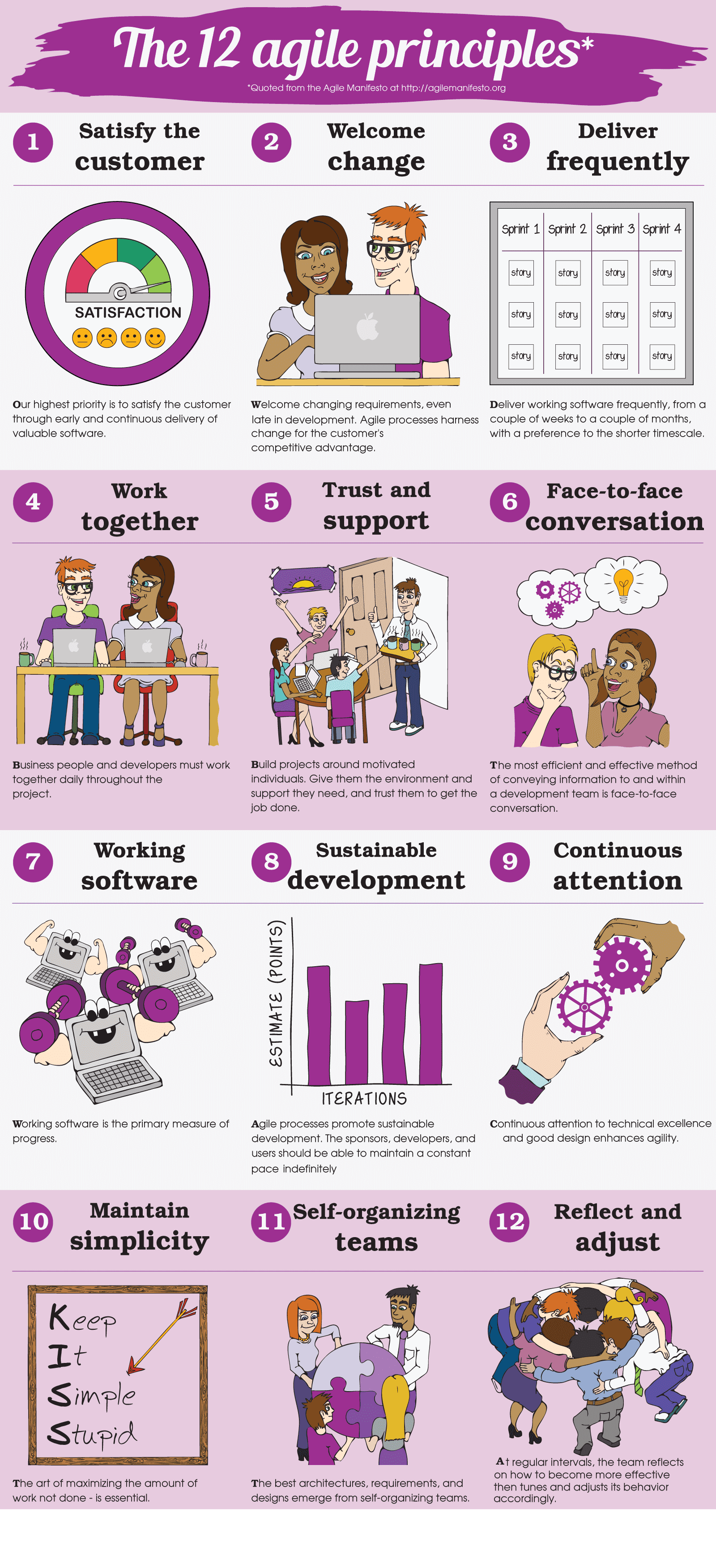
12 Agile Principles:
These 12 principles for agile software development provide a handful of principles to help improve Agile mindset.
What is Scrum?
Scrum is a lightweight framework that helps people, teams and organizations generate value through adaptive solutions for complex problems.
The Scrum framework is purposefully incomplete, only defining the parts required to implement Scrum theory. Rather than provide people with detailed instructions, the rules of Scrum guide their relationships and interactions.
Let’s keep in mind to remember Scrum framework: 3-5-3-5-3
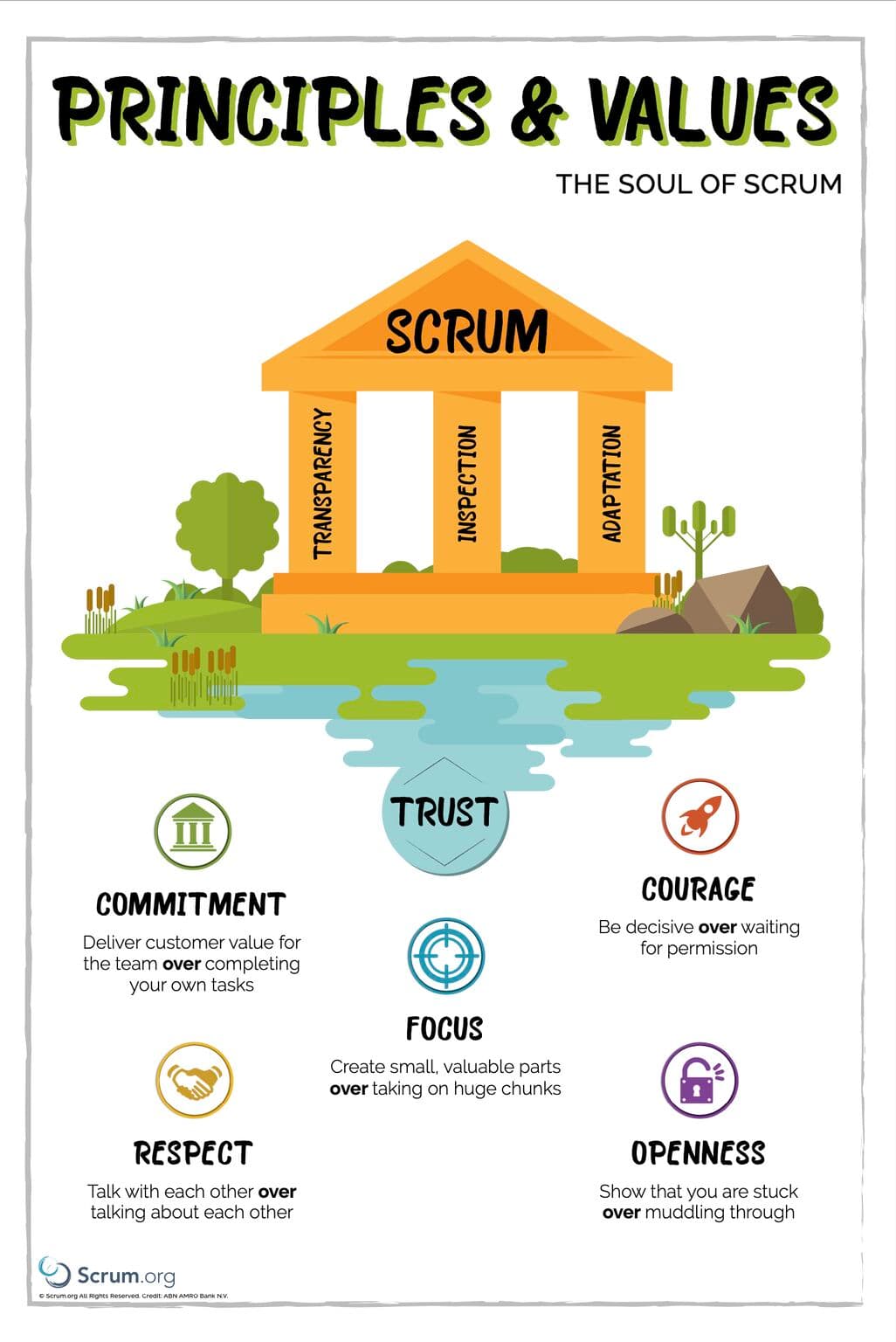
03 Scrum Pillars: Transparency, Inspection, and Adaptation
Scrum has three pillars: transparency, inspection, and adaptation.
-
Transparency: make project work visible and clear to everyone.
-
Inspection: regularly check progress to spot risks and improvements.
-
Adaptation: adjust based on feedback and findings.
Always try to follow these pillars to foster an effective collaboration environment.
05 Scrum Values: FORCC
Focus - Openness - Respect - Commitment - Courage
One critical Scrum Team characteristic that binds all of the elements together is Trust. Trust is manifested through five core values of Scrum. When the Scrum team does not espouse these values, Scrum will not be effective.
03 Roles in Scrum team
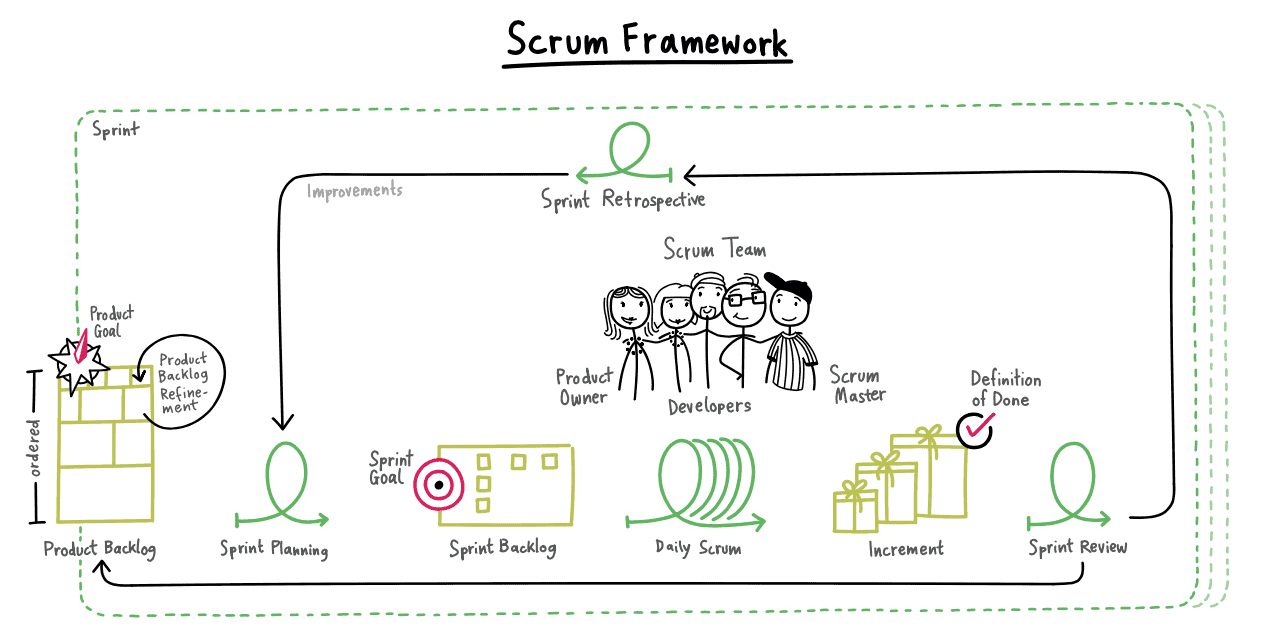
Scrum Team consisting of a Product Owner, a Scrum Master and Developers, each of which have specific accountabilities.
Within a Scrum Team, the best practice that we should follow are
-
No sub-teams or hierarchies. It is not the right way to consider Scrum Master or Product Owner as a team manager and have the strong powerful or authority.
-
Self-management, meaning team members decide among themselves who should work on each task, and they make those decisions at the last responsible moment.
-
Cross-functional, meaning the members have all the skills necessary to create value each Sprint.
05 Scrum Events
Includes Sprint - Sprint Planning - Daily Scrum - Sprint Review - Sprint Retrospective
The Sprint is a container for all other events. They are fixed length events of one month or less to create regularity and to minimize the need for meetings not defined in Scrum.
Each event in Scrum is a formal opportunity to inspect and adapt. These events are specifically designed to enable the transparency required.
03 Scrum Artifacts
Just keep in mind Scrum’s artifacts represent work or value. They are designed to maximize transparency of key information. Thus, everyone inspecting them has the same basis for adaptation.
| Artifacts | Commitment | Explanation for the Commitment |
|---|---|---|
| Product Backlog | Product Goal | The Product Goal is the long-term objective for the Scrum Team. They must fulfill (or abandon) one objective before taking on the next. |
| Sprint Backlog | Sprint Goal | The Sprint Goal is the single objective for the Sprint, encouraging the Scrum Team to work together rather than on separate initiatives. |
| Increment | Definition of Done | The Definition of Done creates transparency by providing everyone a shared understanding of what work was completed. The Scrum Team must create a Definition of Done appropriate for the product. |
Why is Scrum?
If you’re looking for an Agile method to help you manage your products and services, Scrum is an excellent place to start. Scrum supports promoting the Agile mindset in software project development.
However, to use effectively Scrum Framework, notice that:
If a team has enough SM, PO, Developers roles, or performs enough Scrum Events, it can be said that it has followed the Scrum framework correctly.
But that is not enough!
The important thing here is to foster an environment that encourages all members to understand the aspects of this framework, collaborate and work together based on the basic values of Scrum, valuing trust, focus, commitment and the spirit of collaboration.